Evaluation vs. appraisal: what commercial lenders need to know
Both estimate market value, but they answer to different rules. Knowing which one a loan needs saves weeks on small commercial deals without weakening the credit file.

For a federally regulated lender, the collateral value behind a commercial real estate loan must be supported by either an appraisal or an evaluation. The two are often confused, and some banks still order full appraisals for every file out of habit. Others use evaluations where an appraisal would have been wiser. This guide sets out what separates them and how to decide.
The short answer
An appraisal is a written opinion of market value prepared by a state-certified or licensed appraiser under the Uniform Standards of Professional Appraisal Practice (USPAP). Federal regulations require one for most real estate-related financial transactions above set thresholds.
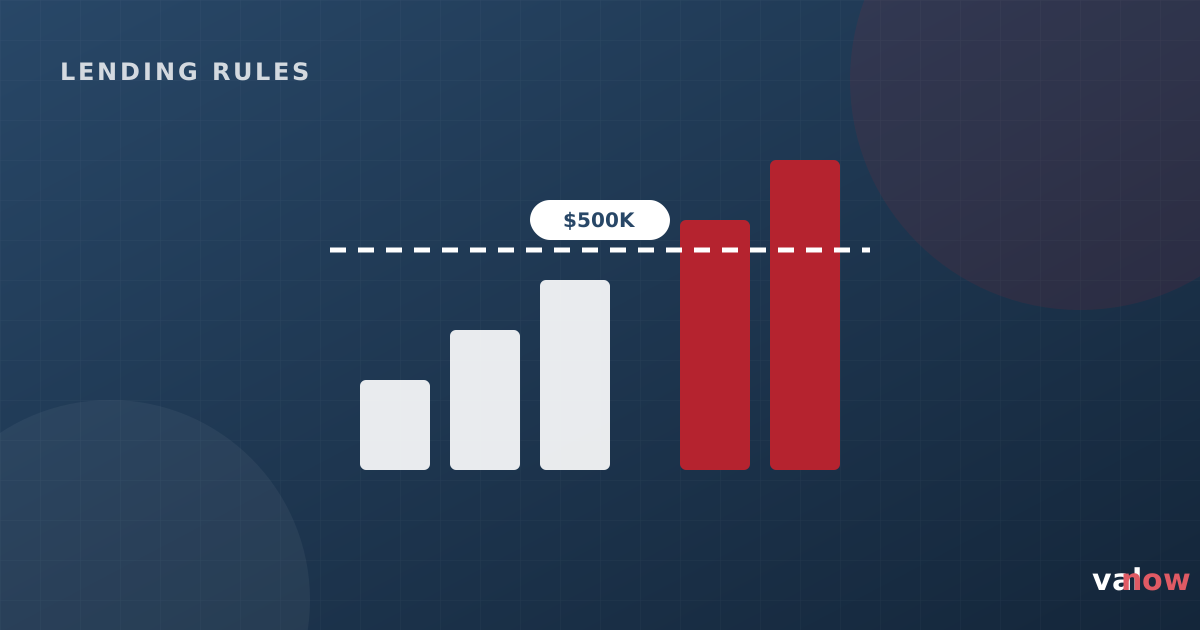
An evaluation is also an estimate of market value, but it is allowed only for transactions the regulations exempt from the appraisal requirement, such as commercial real estate loans of $500,000 or less. It does not have to be prepared by a licensed appraiser, and it is not subject to USPAP, but it must be credible, documented and prepared by someone qualified and independent.
Side by side
| Appraisal | Evaluation | |
|---|---|---|
| When it is required | Transactions above the thresholds, and any transaction the institution considers higher risk | Transactions exempt from an appraisal under the regulations, such as CRE loans of $500,000 or less |
| Who prepares it | A state-certified or state-licensed appraiser, depending on the transaction | A person with the training, experience and market knowledge for the property, independent of the loan decision |
| Standards | USPAP, plus the agencies' minimum appraisal standards | The Interagency Appraisal and Evaluation Guidelines and the institution's own policy |
| Typical content | Full scope of work, highest and best use, all applicable approaches, certification | Property description, value conclusion, method, supporting analysis, sources, effective date and preparer |
| Typical timing | Often two to six weeks for commercial property, depending on the market | Days, or the same day when the data work is automated |
What an evaluation is not
An evaluation is not a shortcut around analysis. The Interagency Appraisal and Evaluation Guidelines expect it to contain enough information to support the credit decision, and examiners review evaluation files the same way they review appraisals: is the value supported, is the method appropriate for the property, and was the preparer independent?
An evaluation is also not just an automated valuation model (AVM) printout. The Guidelines allow analytical methods and technological tools to be used in an evaluation, but the institution must make sure the tool is reliable for the property and the market, and that the evaluation reflects the property's actual physical condition. In practice, a model value is one input, combined with comparable sales, income analysis and a person's review.
How to decide which one a loan needs
- Check the exemption. Is the transaction under a threshold, a qualifying business loan, or a renewal without new money and without a material change in the collateral? If not, you need an appraisal. Our threshold guide lists the common cases.
- Check the risk. Even when an exemption applies, the agencies expect an appraisal for transactions with higher risk: a high loan-to-value, an unusual property, a volatile market, or a borrower whose repayment depends heavily on the property.
- Check your policy. Your appraisal and evaluation program should say when your institution uses an evaluation, who may prepare and review it, and what tools are acceptable.
- Document the choice. Note in the file why an evaluation was appropriate. A one-line rationale saves a long conversation with an examiner.
Where evaluations save the most time
The biggest gains are on small-balance commercial loans: a $350,000 owner-user office purchase, a $480,000 retail strip refinance, a renewal of a multifamily loan with no new money. On these files, the cost and wait of a full appraisal can be out of proportion to the loan, while a well-supported evaluation gives the credit officer what they need.
How Valnow fits
Valnow Evaluation drafts the evaluation for your valuer: model value, market trends, cap rates, comparable sales, county records where available, photos and the sales, income and cost approaches. The valuer answers the open questions, reconciles, concludes and signs. For screening before you decide, a Valnow Valuation gives a value and a confidence score in about a minute.
This article is general information, not legal or regulatory advice. Check your institution's policies and your regulator's current guidance before applying it to a loan.